Banner ads have been around longer than most digital marketers care to admit, yet they continue to hold a firm place in performance marketing.
The reason is simple: when executed correctly, the best banner ads still influence behavior at scale.
They introduce brands, reinforce recall, and nudge users toward action across websites, apps, and platforms that people already trust.
While formats and platforms have evolved, the core mechanics behind effective banner advertising have stayed consistent.
Strong visuals, clear intent, and relevance determine whether a banner ad becomes background noise or a conversion driver.
At its core, a banner ad is a visual display advertisement placed within digital content.
These ads typically appear on websites, inside mobile apps, or across ad networks such as the Google Display Network.
Unlike search ads, banner ads do not rely on explicit user intent at the moment of exposure. Instead, they work by capturing attention mid-browse and guiding the viewer toward a next step.
That distinction is why design quality and message clarity matter far more here than clever wording alone.
The best banner ads balance branding and performance. They are visually clean, immediately understandable, and purpose-built for the placement they appear in.
Poorly designed banner ads fail quickly because users are trained to ignore cluttered or intrusive visuals. Well-designed banner ads, on the other hand, blend into the environment while still standing out enough to be noticed.
Despite ongoing debates about banner blindness, banner ads remain effective when aligned with user context, device behavior, and platform standards.
According to Google’s own Display benchmarks, properly optimized display campaigns continue to support awareness, retargeting, and assisted conversions at scale.
Understanding why some banner ads work and others fail starts with understanding their structure, intent, and role within a broader ad ecosystem.
What Makes the Best Banner Ads Perform Consistently
The difference between average display ads and the best banner ads comes down to execution discipline.
High-performing banner ads are not accidents. They are the result of deliberate design decisions grounded in user behavior, platform constraints, and clear campaign objectives.
A good banner ad communicates one primary idea. That idea must be visible within the first second of exposure.
Users scroll fast, and most banner placements get less than two seconds of attention. This means clarity beats creativity every time.
Logos must be visible but not dominant. Copy must be minimal but purposeful. Calls to action should be obvious without being aggressive.
Visual hierarchy plays a central role. The eye should naturally move from headline to supporting visual to call to action. Crowded layouts break this flow and reduce comprehension.
This is why the best banner ads often look simple, even boring, at first glance. They prioritize readability over decoration.
Relevance also drives performance. Banner ads that align with the surrounding content or the user’s prior behavior perform significantly better than generic creatives.
This is especially true for retargeting campaigns, where familiarity increases click-through rates. Google’s Display Network documentation emphasizes contextual and audience relevance as key performance drivers.
Consistency across formats matters as well. A brand running banner ads across multiple sizes and placements must maintain visual consistency while adapting layouts to each size.
The best banner ads are designed as systems, not one-off creatives. This allows performance insights from one size to inform improvements across others.
Ultimately, banner ads succeed when they respect the environment they appear in. Ads that feel disruptive or misleading are ignored or blocked. Ads that feel helpful, relevant, and visually aligned earn attention and clicks.
Are Banner Ads Still Effective in Modern Digital Advertising?
Banner ads remain effective, but their role has shifted. They are no longer expected to carry entire funnels on their own.
Instead, the best banner ads support awareness, retargeting, and assisted conversion paths within multi-channel strategies.
Performance data consistently shows that banner ads excel when paired with intent-based channels like search or shopping ads.
Users may first encounter a brand through a display banner, then convert later through search or direct traffic.
Attribution models that only credit last-click conversions often undervalue banner ads, which is why experienced advertisers evaluate them using view-through conversions and assisted metrics.
Advances in targeting have also extended banner ad effectiveness. Programmatic buying, contextual targeting, and first-party data integration allow banner ads to reach users at more relevant moments than ever before.
While third-party cookies are declining, platforms like Google and Meta continue to refine privacy-safe targeting models that keep display ads viable.
Creative quality has become the main differentiator. Generic banners with stock photos and vague messaging no longer perform. The best banner ads are tailored to specific audiences, placements, and devices.
Mobile-first design is especially critical, as a significant portion of display impressions now occur on smartphones.
Banner ads also play a key role in brand safety and controlled reach. Unlike social feeds, display placements can be curated and whitelisted.
This gives advertisers more control over context, which matters for brand trust and compliance.
In short, banner ads are not obsolete. Poor banner ads are. The advertisers seeing results are the ones who treat banner ads as precision tools rather than mass impressions.
Best Banner Ads for Websites and Placement Strategy

Choosing the right placement is as important as designing the creative itself. The best banner ads for websites are designed with placement behavior in mind. Where an ad appears influences how it is perceived and whether it is interacted with.
Above-the-fold placements generally attract more impressions but not always more clicks. Users often scroll past these areas quickly.
In-content placements, where banner ads appear between paragraphs or sections, tend to perform better for engagement because they align with natural reading patterns.
Sticky banners can work, but only when they are subtle and non-intrusive.
Website layout matters. Clean, content-focused websites often deliver better banner ad performance than cluttered pages.
This is why premium publisher sites tend to outperform low-quality networks, even at higher CPMs. Contextual relevance between the ad and the page content further improves outcomes.
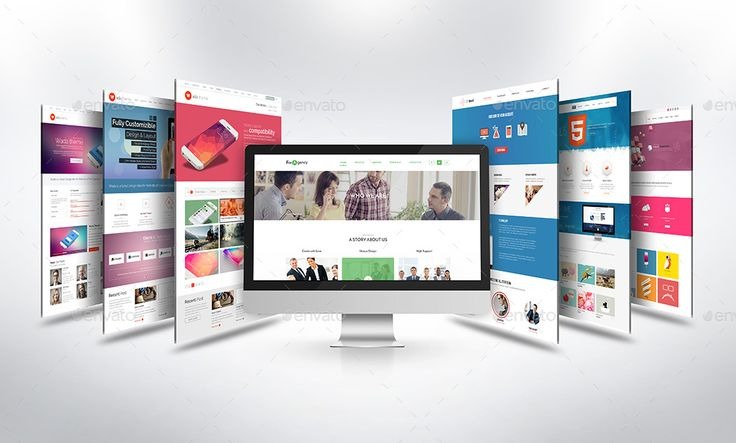
Responsive design is now a requirement, not a bonus. The best banner ads for websites adapt seamlessly across screen sizes and orientations.
Google’s responsive display ads were built around this principle, allowing multiple asset combinations to dynamically fit placements.
Load speed also affects performance. Heavy banner creatives slow down pages and increase bounce rates.
Lightweight formats and compressed assets preserve user experience and improve viewability metrics.
Effective placement strategy considers not just visibility, but user intent. Ads placed where users are researching or comparing tend to outperform those placed in passive browsing environments.
Best Size for Banner Ads and Why It Matters
Banner size directly affects performance because it determines visibility, layout flexibility, and compatibility with ad networks.
The best size for banner ads depends on placement goals and device distribution, but some formats consistently outperform others.
Medium rectangle (300×250) remains one of the most effective sizes due to its versatility and placement options. It fits well within content and performs across desktop and mobile.
Large rectangle (336×280) offers more space for messaging but has more limited inventory.
Leaderboard formats such as 728×90 and 970×90 work well for brand visibility, especially on desktop.
However, they often have lower click-through rates than in-content units. Mobile-focused sizes like 320×50 and 300×50 dominate mobile impressions and must be designed with extreme simplicity.
The best banner ads are rarely built in a single size. High-performing campaigns typically include a core set of sizes optimized for reach and engagement.
Google publishes a regularly updated list of recommended display sizes based on inventory availability and performance trends.
Aspect ratio consistency across sizes improves brand recognition. When users encounter similar visuals in different formats, recall increases. This reinforces why banner ad design should be modular rather than static.
Ignoring size optimization limits scale. Campaigns that only support one or two sizes struggle to fully leverage display networks.
Google Banner Ads Best Practices That Actually Matter
Running banner ads on Google requires adherence to both creative and technical standards.
The best banner ads on Google are compliant, fast-loading, and aligned with platform expectations.
Clear branding is non-negotiable. Google policies require that ads be easily distinguishable from content.
Misleading designs that mimic site navigation or system alerts are disapproved. Transparency builds trust and long-term account stability.
Copy must match landing page intent. Mismatched messaging leads to low quality scores and reduced delivery.
Google evaluates relevance not just for search ads, but also for display creatives and destinations.
Frequency control is another overlooked factor. Showing the same banner ad too often leads to fatigue and declining performance.
Google’s frequency capping tools help prevent overexposure, especially in remarketing campaigns.
Image quality matters more than animation. While HTML5 ads allow motion, excessive animation often distracts rather than converts. The best banner ads use subtle motion to guide attention, not overwhelm it.
Testing is ongoing. Google’s machine learning favors advertisers who provide multiple creative variations.
Even small changes in color, headline order, or call to action can produce meaningful performance differences over time.
Understanding the Difference Between DSA and RSA Ads in Context
Dynamic Search Ads (DSA) and Responsive Search Ads (RSA) are often confused with display formats, but they serve different purposes within the Google Ads ecosystem.
Understanding the difference helps clarify where banner ads fit.
DSA ads automatically generate headlines based on website content and user queries. They appear in search results and are designed to capture long-tail demand.
RSA ads allow advertisers to input multiple headlines and descriptions, which Google then tests and optimizes dynamically.
Banner ads, by contrast, are display-based. They rely on visuals rather than text-first intent signals.
While DSA and RSA ads capture demand, banner ads help create and reinforce it. This distinction is why mature ad strategies use all three in complementary roles.
Google itself positions display ads as a top-of-funnel and mid-funnel tool, while search ads handle bottom-of-funnel conversions.
The best banner ads therefore do not compete with RSA or DSA ads; they support them.
Understanding this ecosystem prevents unrealistic expectations and improves overall performance attribution.
Designing Banner Ads That Convert Without Overengineering
Conversion-focused banner ads are not overloaded with features. They guide the user toward one action. That action must be obvious, credible, and friction-free.
Strong calls to action are specific rather than generic. “Learn more” works when paired with value clarity. “Get a quote” works when intent is high.
The best banner ads align CTA language with audience awareness level.
Landing page continuity matters. Visual and messaging consistency between the banner ad and landing page reduces bounce rates and increases conversions. When users feel continuity, trust increases.
Retargeting banners often outperform prospecting banners because the audience is warmer. The best banner ads for retargeting focus on reassurance, reminders, and clear incentives rather than introductions.
Measurement completes the loop. Without tracking view-through conversions, assisted conversions, and frequency impact, banner ads are often misjudged.
Platforms like Google Analytics and Google Ads conversion modeling provide deeper insight into true performance.
Conclusion
The best banner ads succeed because they respect attention, context, and intent. They are designed with purpose, deployed strategically, and measured realistically.
Banner ads are not shortcuts to instant conversions, but they remain one of the most reliable tools for scalable awareness and assisted performance when executed correctly.
From choosing the best size for banner ads to following Google banner ads best practices, every decision compounds.
Brands that treat banner ads as part of a connected system see results. Those that treat them as afterthoughts do not.
When designed with clarity, relevance, and discipline, banner ads continue to earn their place in modern digital marketing.