
Local search has shifted from being optional to essential.
When users search for services “near me,” Google’s local algorithm evaluates proximity, relevance, and prominence to decide which businesses appear in the local pack and organic listings.
According to Google’s own consumer insights, a significant share of mobile searches carry local intent, and many of those searches result in in-store visits or direct contact within a day.
This is where adjusting strategies based on local seo data becomes decisive.
Instead of relying on assumptions about what customers want, businesses can analyze Google Business Profile insights, local keyword rankings, citation consistency, on-page signals, and behavioral metrics to make calculated improvements.
When decisions are informed by local search data, it’s easier for improvements to compound.
Local SEO performance metrics—click-through rate, impressions, direction requests, calls, and conversion rates—provide a real-time feedback loop.
Tools like Google Search Console and Google Business Profile Insights reveal how users discover and interact with listings. Combined with platforms such as Google Analytics and local rank trackers like BrightLocal’s Local Search Rank Checker, businesses can track what moves the needle in their local market.
#1. Higher Local Search Rankings Through Data-Driven Optimization

Improved visibility in the local pack does not happen by accident. Google’s local ranking framework evaluates relevance, distance, and prominence, as outlined in Google’s official documentation on How to improve your local ranking.
Businesses that prioritize adjusting strategies based on local seo data align directly with these ranking factors instead of guessing what Google prefers.
Local keyword research is foundational. Search behavior differs by city, neighborhood, and even district.
By analyzing query reports in Google Search Console, companies can identify high-intent local keywords and long-tail local keywords that are already generating impressions.
Optimizing title tags, meta descriptions, service pages, and schema markup around those exact terms increases relevance. Structured data implemented using local business schema helps search engines interpret business details accurately.
Adjusting strategies based on local seo data also exposes underperforming pages. If impressions are high but clicks are low, title tags and meta descriptions likely need refinement.
If rankings fluctuate, citation inconsistencies or weak backlinks from local directories may be contributing factors.
NAP consistency—Name, Address, Phone number—remains critical. Discrepancies across directories such as Yelp, Bing Places, and industry-specific listings dilute trust signals. Regular citation audits reduce confusion for search engines and reinforce authority.
When ranking improvements are measured weekly and changes are implemented methodically, the outcome is consistent upward movement in local search results.
Over time, higher placement in the local pack dramatically increases visibility and brand exposure within the immediate service area.
#2. Increased Click-Through Rates from Local SERPs
Ranking alone does not guarantee engagement. The way listings appear in local search results influences user behavior significantly.
Businesses that focus on adjusting strategies based on local seo data analyze click-through rates from both organic listings and Google Business Profile entries.
Google Business Profile optimization plays a direct role here. According to Google’s documentation, complete and accurate profiles are more likely to appear in relevant searches.
Adding high-quality images, selecting accurate business categories, posting updates, and maintaining consistent hours improve listing attractiveness and relevance.
Local SEO performance metrics reveal patterns. If impressions are rising but calls and website visits remain flat, the listing may lack compelling descriptions or updated images.
Google Business Profile insights display how customers find listings—via direct search (branded queries) or discovery search (category-based queries).
Adjusting strategies based on local seo data allows businesses to optimize category selection and service descriptions accordingly.
Reviews also influence click-through behavior. Research from BrightLocal’s Local Consumer Review Survey consistently shows that consumers rely heavily on online reviews when evaluating local businesses.
Encouraging satisfied customers to leave detailed, keyword-rich reviews increases perceived trustworthiness and improves listing appeal.
Small refinements—clear service descriptions, relevant attributes, fresh photos, and consistent review responses—can significantly improve engagement rates.
Over time, higher click-through rates reinforce positive behavioral signals, which can further strengthen rankings.
#3. Better Conversion Rates from Local Traffic
Traffic without conversions wastes opportunity. One of the strongest advantages of adjusting strategies based on local seo data is the ability to connect search behavior with real-world actions such as calls, bookings, or visits.
Local search intent is often transactional. Users searching for “emergency plumber near me” or “best digital marketing agency in Abuja” are typically ready to act.
By analyzing landing page performance in Google Analytics, businesses can identify friction points—high bounce rates, slow page load times, or unclear calls-to-action.
Page speed directly impacts user experience. Google’s Core Web Vitals guidelines outline measurable performance standards.
Slow-loading local pages reduces conversions, especially on mobile devices. Adjusting strategies based on local seo data frequently includes technical improvements such as image compression, caching optimization, and streamlined code.
Clear contact information is equally critical. Click-to-call buttons, embedded Google Maps, and localized testimonials build confidence. Data may reveal that mobile users convert more frequently than desktop users, prompting mobile-first design adjustments.
Additionally, aligning landing page content with specific local keywords increases message match. If users search for “affordable family dentist in Ikeja,” the landing page should directly address affordability, family services, and the Ikeja location.
Data-driven refinement eliminates ambiguity and strengthens the probability of conversion.
#4. Stronger Google Business Profile Performance

Google Business Profile is central to local visibility. Its influence extends beyond simple listings; it shapes local pack inclusion and customer interaction patterns.
Adjusting strategies based on local seo data often begins with a detailed Google Business Profile analysis.
Insights reveal how many customers request directions, call directly from the listing, or click through to the website.
Seasonal patterns also emerge. For example, retail businesses may see surges before holidays. Restaurants might observe peak searches on weekends. Acting on this data enables precise promotional timing.
Posting regular updates within Google Business Profile signals activity and relevance. Adding new services, offers, or announcements keeps the listing dynamic.
Businesses that consistently respond to reviews also build trust and demonstrate customer engagement.
Category optimization matters more than many assume. Selecting primary and secondary categories based on search data improves relevance.
Google’s official support page clarifies that accurate categories help the algorithm understand business offerings.
Adjusting strategies based on local seo data ensures that category selections reflect real search demand rather than internal assumptions.
The cumulative result is stronger local pack positioning, increased direct interactions, and improved visibility across Google Maps.
#5. Smarter Local Content Strategy
Local content marketing works best when it reflects real community interest. Generic blog posts rarely dominate geographically specific searches. Adjusting strategies based on local seo data enables content that aligns precisely with regional demand.
Search query analysis may reveal location modifiers frequently attached to service keywords. Creating neighborhood-focused landing pages—when genuinely distinct—helps address hyperlocal searches.
However, Google discourages duplicate doorway pages, so content must be unique and valuable.
Local events, partnerships, and sponsorships also provide opportunities for content. Coverage of community involvement builds local backlinks and strengthens prominence signals.
Backlinks from credible local news outlets, chambers of commerce, and community organizations improve domain authority and local trust.
Adjusting strategies based on local seo data often includes refining internal linking structures to connect blog posts with service pages. This distributes authority effectively and enhances crawlability.
Data may also reveal underserved content gaps. If competitors rank for certain localized queries and you do not, targeted content development becomes strategic rather than reactive.
Over time, a structured local content strategy increases authority, visibility, and user engagement simultaneously.
#6. Improved Competitive Positioning in Local Markets
Local markets are finite ecosystems. When competitors invest in optimization, stagnation results in lost visibility.
Adjusting strategies based on local seo data provides insight into competitor performance and positioning.
Tools such as SEMrush and Ahrefs offer competitive keyword analysis and backlink tracking. By identifying which keywords competitors rank for in specific geographic areas, businesses can adjust their own optimization priorities.
Review monitoring is another competitive signal. If competitors accumulate significantly more reviews, that prominence signal may influence rankings. Implementing structured review acquisition strategies helps close that gap.
Adjusting strategies based on local seo data also identifies areas where competitors underperform. Perhaps they lack optimized service pages or structured data markup. Filling those gaps strategically improves relative visibility.
Local citation audits may reveal directory placements competitors maintain, but you do not. Expanding citation presence increases prominence and reinforces NAP consistency.
Competitive advantage in local search is cumulative. Data-driven iteration ensures sustained improvement rather than sporadic effort.
#7. Measurable, Scalable Local Growth
The final benefit is predictability. Adjusting strategies based on local seo data transforms marketing from reactive to systematic.
Instead of chasing trends, businesses track measurable KPIs: local keyword rankings, organic traffic from geographic regions, conversion rates, review velocity, and Google Business Profile interactions.
This structured approach enables scalable growth. When a tactic improves results in one location, it can be replicated in additional service areas with localized adjustments. Multi-location businesses particularly benefit from standardized yet data-informed frameworks.
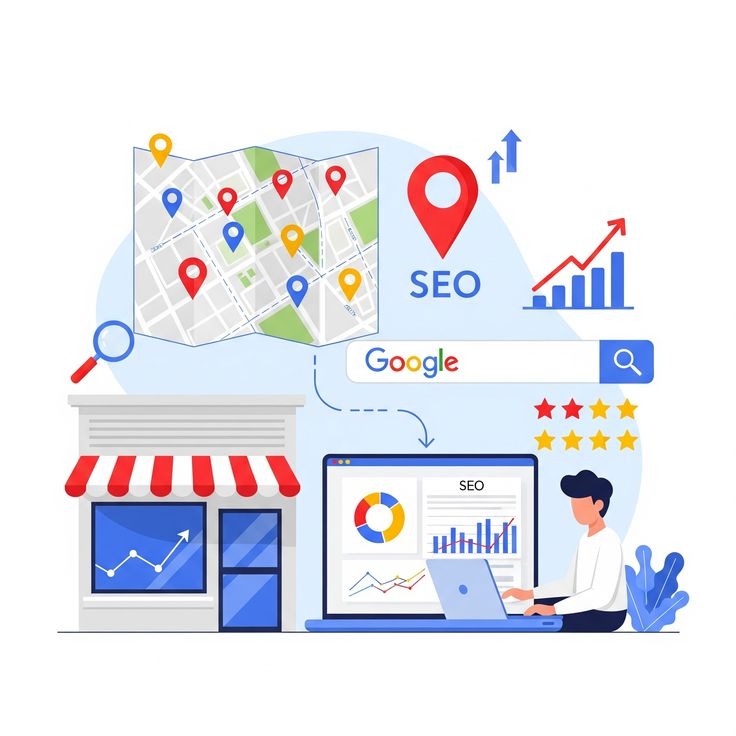
Local SEO performance metrics provide accountability. Clear benchmarks—monthly growth in impressions, increased calls, improved local pack rankings—allow leadership teams to evaluate ROI objectively.
Long-term consistency matters. Google’s local algorithm rewards accuracy, relevance, and engagement over time.
Sporadic updates do not produce durable results. Sustained adjusting strategies based on local seo data create a feedback cycle where each improvement informs the next.
As search behavior evolves, continuous monitoring ensures agility. Algorithm updates, shifts in consumer behavior, and seasonal trends all become manageable variables rather than disruptive surprises.
Conclusion
Local visibility is no longer a side project. It determines whether nearby customers discover or overlook your business. The consistent pattern across industries is clear: organizations that commit to adjusting strategies based on local seo data outperform those that rely on static optimization.
From higher local search rankings and improved click-through rates to stronger Google Business Profile performance and measurable conversion growth, the benefits are concrete. Data-driven local optimization enhances relevance, strengthens prominence, and improves user experience.
The process is ongoing. Local search intent evolves, competitors adapt, and algorithms refine. Businesses that treat local SEO as a dynamic system—analyzed, tested, and improved continuously—position themselves for sustainable growth in increasingly competitive markets.
Precision, consistency, and measurement define modern local search success.