The Google Ads learning phase is one of those quiet, behind-the-scenes moments that can make or break your campaign performance.
You launch a new ad, tweak a bid, adjust your targeting, or switch up your conversions — and suddenly everything feels unstable.
Costs jump. Results wobble. Your once-predictable metrics start behaving like they’re testing your patience on purpose.
But that instability isn’t chaos; it’s Google’s system recalibrating, gathering fresh signals, and trying to understand what success should look like.
In 2025, this learning period has become even more influential as Google leans harder on automation, audience modeling, and forward-predictive bidding.
The better you understand what actually happens during learning — and how to work with it instead of against it — the faster your campaigns regain momentum and stabilize into strong, consistent performance.
What Triggers the Learning Phase, And Why It Matters
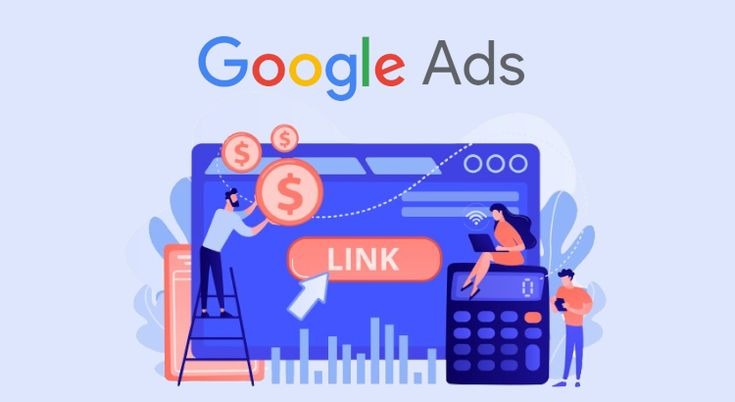
Whenever you launch a new campaign in Google Ads, or significantly adjust an existing one, the system often shifts into what’s called the learning phase.
This can be triggered by a variety of actions:
#1. Starting a fresh campaign with automated bidding (e.g. “Maximize Conversions” or “Target CPA/ROAS”).
#2. Changing your bid strategy or bid settings.
#3. Adjusting budget significantly — particularly increases or decreases beyond a 20% threshold.
#4. Switching creatives, asset groups, or conversion tracking rules.
#5. Restructuring the campaign — adding/removing ad groups or keywords, or changing targeting definitions.
Why does this matter? Because during the learning phase, the system is essentially re-calibrating.
It’s building a fresh view of which audiences, placements, bidding values and creatives are likely to convert best — based on your current configuration.
Without that recalibration, the campaign may deliver sub-optimal results, waste budget, or misfire.
That’s why many changes can’t be rushed, and why the learning phase isn’t something to dread — it’s foundational.
What Happens Behind the Scenes
Once triggered, the learning phase activates a series of behind-the-scenes processes designed to optimize ad delivery.
Rather than using a fixed or static recipe, the system tests, learns, and adapts. Here’s what’s going on:
#1. The algorithm experiments with different bid amounts, placements (search vs display vs video or other networks), and audience segments to evaluate what performs best.
#2. It shows ads under varying conditions — times of day, device types, demographics, ad creatives — to determine which combinations lead to conversions.
#3. As you accumulate impressions, clicks, and (most importantly) conversions, the system uses that data to build predictive models.
These models help it bid more intelligently — balancing cost per acquisition (CPA), return on ad spend (ROAS), and conversion probability.
#4. During this adjustment period, you’ll likely see volatility: fluctuating cost-per-click (CPC), inconsistent click-through rates (CTR), unpredictable conversion rates, and generally unstable performance metrics.
This instability isn’t a sign of failure — it’s the system learning.
The algorithm doesn’t yet “know” which combinations will yield the best results; it needs real data from your audience and budget context.
Once enough data accumulates, it shifts from experimentation to exploitation — optimizing delivery toward what works.
What to Expect (and When Stability Arrives)
Understanding how long the learning phase lasts is key for setting expectations and planning budgets.
The timeline is not fixed — it depends on several factors — but there are industry-accepted benchmarks.
#1. For many campaigns, the learning phase is around 7 days — roughly one week — provided conversions start flowing.
#2. For simpler campaigns or those with lower traffic, it might stretch to 1–2 weeks.
#3. In more complex campaigns — especially those using broader bidding strategies or more granular targeting — the learning phase can extend beyond two weeks.
#4. The key determinant is conversion volume. Automated bidding campaigns often require a certain number of conversions (some sources suggest around 50 conversions over a short period) to finish learning and stabilize.
Once this threshold is reached and enough data has been gathered, performance tends to stabilize: CPCs settle, conversion rates become more predictable, and return on ad spend (ROAS) becomes more reliable.
Why Conversions Matter More Than Ever
A common misconception is that clicks alone are the foundation for ending the learning phase. In reality, conversions (or other meaningful actions) hold far more weight.
That’s because the algorithm’s goal is to deliver results, not just traffic.
If a campaign generates lots of clicks but no conversions, the algorithm lacks insight into what drives meaningful outcomes. As a result:
#1. It may delay optimization because it doesn’t have enough evidence of what works.
#2. Performance may stay volatile or poor — CPC high, CPA high, conversion rate uncertain.

#3. The campaign may even bounce back into learning if you make significant changes too early, because the system resets and needs to rebuild data.
Therefore, optimizing for conversions from the start — through clean landing pages, relevant targeting, and clear calls to action — is often more effective than trying to drive clicks only.
Once conversions start flowing, the learning phase ends earlier and performance improves faster.
What Advertisers Should Expect
Because of the behind-the-scenes experimentation, the early days of a campaign in the learning phase often feel chaotic. Advertisers might see:
#1. Cost per click (CPC) spikes, as the system bids more to test placements and audiences.
#2. Fewer conversions than expected, or conversion rates fluctuating wildly.
#3. Uneven distribution of impressions — some days high, others low.
#4. Return on ad spend (ROAS) that may look terrible at first — especially if the campaign is set for conversion rather than traffic.
This is normal. The algorithm is learning. If you panic, make big changes, or judge performance prematurely — you’ll likely extend the instability, reset the learning, or confuse the system.
It’s better to treat the first 7–14 days as “calibration time,” not performance time.
Best Practices to Make the Learning Phase Work for You
If you want your campaign to transition smoothly through the learning phase and emerge stronger, here are some practices that tend to work well.
Launch clean, stable campaigns: Avoid multiple major changes upfront. Set the bid strategy, audience targeting, creatives, budget, and conversion tracking clearly before you start.
Give it time — at least a week or two: Unless something is obviously broken (e.g. zero impressions), resist the urge to tinker during the first 7–14 days.
Focus on conversions, not just clicks: Optimize your landing pages, make sure tracking is correct, and structure offers and calls-to-action that encourage real conversions.
Avoid big adjustments mid-learning phase — especially budget and bid strategy changes: A sudden budget increase above 20% or switching to a different bidding strategy can reset the learning phase, forcing the system to relearn.
Use data-rich campaigns or mature account history where possible: Accounts with past conversion history or campaigns with steady traffic tend to exit learning faster.
Be patient and interpret early metrics with caution: Early fluctuations are part of the process. Look for trends over time (CPC stabilizing, improved conversion rate, uplift in ROAS) rather than reacting to daily swings.
Common Pitfalls & What They Mean
Not all learning phases conclude smoothly. Sometimes your campaign never stabilizes — or performance gets worse after learning. Several issues can cause this, including:
#1. Insufficient conversions or too narrow targeting: If your audience or offer doesn’t produce conversions, the system lacks data to optimize.
#2. Overly aggressive or frequent changes: Budget spikes, bid resets, or creative swaps too soon reset learning.
#3. Complex campaign structure with too many variables (multiple ad groups, audiences, creatives) — making it hard for the algorithm to isolate what works.
#4. Inaccurate or incomplete conversion tracking — if conversions aren’t recorded properly, the system can’t learn.
In such cases, you risk staying in learning mode indefinitely or cycling back into it. That’s not a bug — it’s just the algorithm not having enough stable, reliable data to lock on a “winning formula.”
How the 2025 Upgrades to Google Ads Affect the Learning Phase
With ongoing changes to digital advertising platforms, the learning phase for 2025 campaigns has some evolving nuances worth noting:
#1. Some sources suggest that campaigns using broader formats (e.g. “performance-max” or cross-channel campaigns) may require more time to stabilize because the algorithm needs to optimize across more variables (placements, formats, conversion paths) than before.
#2. Because user behavior, privacy restrictions, and evolving policy/regulation affect how conversion data is collected, the system may need more “quality data” to confidently optimize — which means conversion tracking and accurate setup before launch are more important than ever.
These shifts don’t fundamentally change what the learning phase does — they just increase the importance of setup, patience, and conversion efficiency.
What Good Performance Looks Like
Once the learning phase is complete — typically after the system has gathered enough conversions and performance begins to stabilize — you should expect to see:
#1. More consistent CPCs and fewer spikes.
#2. Stable or improving conversion rates.
#3. Improved and predictable cost per acquisition (CPA) and better return on ad spend (ROAS).

#4. More efficient ad delivery — the algorithm shows ads to users more likely to convert, at better bids, boosting overall performance.
At this stage, your campaign is no longer “guessing.” It’s executed based on real data.
From here, you can focus on scaling, testing new creatives or audiences, and refining messaging — but with much better foundations.
Conclusion
In a world of rising ad costs, tighter budgets, and more competition, wasting spend during poor-performing early days can sink entire campaigns.
Recognizing the learning phase for what it is — a data-gathering period — lets advertisers manage expectations, budget wisely, and avoid panic-driven changes.
Also, as the digital ad ecosystem evolves, with more emphasis on conversions, privacy, and smart bidding, campaigns that respect the learning phase — by giving the algorithm clean, consistent data — are far more likely to succeed long-term.
Rather than trying to “game” the system, you work with it.
For brands, agencies, and marketers alike, this understanding can mean the difference between campaigns that sputter and campaigns that scale.