Marketing budgets are rarely unlimited, and the way a business divides spending between brand-building efforts and short-term sales tactics directly affects revenue stability and long-term growth.
The debate around promotion vs advertising is not theoretical; it shapes how companies allocate resources, structure campaigns, and measure success across digital and traditional channels.
Advertising typically refers to paid communication placed in controlled media environments such as television, search engines, social platforms, banner advertising networks, and website advertising placements.
Promotion, on the other hand, extends beyond paid ads to include sales promotions, public relations, personal selling, and other incentive-driven activities designed to stimulate demand.
While advertising is a component of promotion, the two are not interchangeable.
Understanding promotion vs advertising is especially critical in the era of Internet advertising and advanced online advertising platforms.
Businesses now deploy product ads, banner ads, and promotional ads simultaneously, often without clearly distinguishing their strategic purpose.
Clarifying where advertising ends and promotion begins allows marketers to align objectives, select the right products to advertise, and structure the advertisement of any product with measurable impact and long-term brand integrity.
Understanding Promotion vs Advertising in Modern Marketing Strategy
The discussion around promotion vs advertising remains one of the most misunderstood areas in marketing.
Although the terms are often used interchangeably, they represent distinct but interconnected functions within a company’s broader communication strategy.
Clarifying this distinction is essential for structuring effective campaigns across traditional media, Internet advertising, and digital ecosystems.
At a foundational level, advertising refers to paid, non-personal communication delivered through identified sponsors to inform or persuade a target audience.
The American Marketing Association defines advertising as paid placement in media designed to promote products, services, or ideas.
This includes television commercials, print ads, radio spots, banner advertising, website advertising, and modern online advertising placements across search engines and social platforms.
Promotion, however, sits within a broader framework known as the promotional mix.
The promotional mix consists of advertising, sales promotion, public relations, direct marketing, and personal selling.
In this structure, advertising is not separate from promotion; it is a component of it.
This is where promotion vs advertising becomes strategically important. Advertising is one tool within promotion.
Promotion includes short-term incentives such as discounts, coupons, and limited-time offers delivered through promotional ads. It also includes publicity efforts, event marketing, and influencer collaborations.
In digital environments, advertising and promotion intersect continuously.
For example, a business running product ads through online advertising platforms may use them to build awareness, while simultaneously launching promotional ads offering a 15% discount.
Both efforts exist under advertising and promotion, but they serve different objectives.
Understanding promotion vs advertising therefore requires clarity about scope. Advertising builds brand awareness and positioning. Promotion drives immediate behavioral response.
Difference 1: Scope and Strategic Positioning
The first structural difference in promotion vs advertising lies in scope. Advertising is a subset of promotion, but promotion encompasses a wider array of activities.
Advertising is strictly paid media placement. When a brand invests in banner ads on a news website, runs product ads on Google Shopping, or places sponsored posts on social media through online advertising platforms, it is engaging in advertising.
The objective may be awareness, persuasion, or reminder.
Promotion includes advertising but extends further into sales promotion activities such as rebates, contests, sampling, and trade promotions.
The U.S. Small Business Administration outlines sales promotion as short-term incentives designed to encourage immediate purchase.
This difference matters when planning the advertisement of any product. If the goal is long-term positioning for new products to advertise, advertising becomes central.
If the objective is clearing inventory before quarter-end, promotional ads offering discounts take precedence.
Internet advertising and website advertising amplify this distinction. A display campaign focused on brand storytelling differs from a limited-time flash sale promoted via promotional ads across online advertising platforms.
The scope distinction clarifies why promotion vs advertising should not be treated as a semantic debate. It affects budgeting, timelines, and performance metrics.
Difference 2: Time Horizon and Objective
The second major distinction in promotion vs advertising relates to time frame and expected outcome.
Advertising tends to focus on long-term brand equity. Research has demonstrated that sustained advertising investment correlates with increased brand recall and long-term sales growth.
These campaigns may not produce immediate spikes in revenue but contribute to market share over time.
Promotion is short-term by design. Sales promotions, including promotional ads offering “buy one, get one” or seasonal discounts, are structured to trigger immediate action. The goal is acceleration, not gradual persuasion.
Within online advertising, this difference becomes measurable. Banner advertising campaigns may optimize for impressions and reach, while promotional ads optimize for conversion rate and cost per acquisition.
When evaluating promotion vs advertising, businesses must determine whether they need to shape perception or stimulate urgency.
Product ads for a newly launched smartphone might emphasize features and brand positioning over months.
In contrast, a weekend discount campaign focuses on immediate transaction volume.
This time-based distinction also clarifies the main difference between advertisements and sales promotions.
Advertisements aim to inform and persuade. Sales promotions aim to incentivize immediate purchase through tangible offers.
Difference 3: Control and Media Ownership
Another key dimension of promotion vs advertising lies in control over messaging.
Advertising involves paid placement, which provides high control over creative execution, timing, and distribution.
Brands decide visuals, headlines, and calls to action. Online advertising platforms such as Google Ads or Meta Ads allow advertisers to set targeting parameters and budget limits.
Promotion includes activities where control may be shared or limited. Publicity, for instance, involves earned media coverage.
According to the Public Relations Society of America, publicity refers to media attention gained without direct payment.
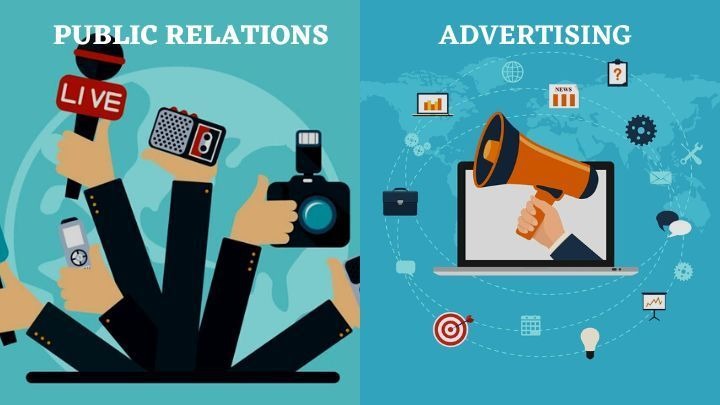
A news outlet reviewing a product without compensation falls under publicity, not advertising.
The difference between promotion and publicity becomes evident here. Promotion includes both paid and non-paid tactics. Publicity is specifically earned media coverage. Advertising is always paid.
Website advertising exemplifies controlled media. A brand purchasing homepage placements or running banner ads across partner sites fully dictates messaging.
Publicity, by contrast, depends on editorial discretion.
This distinction shapes promotion vs advertising decisions in industries where credibility matters. Publicity may build trust, while advertising ensures message consistency.
Difference 4: Types and Structural Components
Understanding the four types of promotion clarifies the promotional landscape.
Marketing theory commonly identifies these as advertising, sales promotion, personal selling, and public relations. Some frameworks add direct marketing as a fifth element.
The four types of advertising, meanwhile, are often categorized as display advertising (including banner advertising), search advertising, broadcast advertising, and print advertising.
In digital contexts, Internet advertising typically covers search, display, video, and social placements.
When analyzing promotion vs advertising, these classifications reveal overlap but not equivalence. Advertising is one type of promotion. Sales promotion, personal selling, and public relations extend beyond it.
For example, product ads placed through online advertising platforms fall under advertising. A coupon distributed via email belongs to sales promotion.
A press release generating unpaid media coverage represents publicity within promotion.
These structural distinctions influence strategy selection when choosing products to advertise. A high-ticket B2B solution may rely heavily on personal selling combined with website advertising.
A fast-moving consumer goods might emphasize promotional ads and banner advertising for rapid volume.
Difference 5: Measurement and Metrics
Measurement frameworks further distinguish promotion vs advertising.
Advertising performance metrics typically include impressions, reach, click-through rate, brand recall, and return on ad spend. Online advertising platforms provide detailed dashboards tracking performance in real time.
Promotion metrics focus on redemption rate, sales lift, coupon usage, and short-term revenue spikes.
According to HubSpot’s analysis of promotional campaign effectiveness sales promotions often generate measurable increases in purchase volume during limited windows.
Internet advertising campaigns targeting awareness may prioritize cost per thousand impressions. Promotional ads prioritize cost per acquisition.
The difference in metrics reflects the core difference in objective. Advertising builds long-term memory structures in consumers’ minds.
Promotion triggers immediate transactional behavior.
When evaluating promotion vs advertising, marketers must align KPIs accordingly. Measuring a brand campaign solely on short-term sales may misrepresent its effectiveness.
Difference 6: Budget Allocation and Investment Strategy
Budget allocation highlights another practical difference in promotion vs advertising.
Advertising often receives sustained, recurring budget allocation. Brands invest continuously in website advertising, banner ads, and product ads to maintain visibility across digital channels.
Promotion budgets are typically episodic. Funds are allocated around product launches, holiday seasons, or inventory clearance campaigns.
The Interactive Advertising Bureau reports consistent year-over-year growth in digital ad spending, reflecting long-term investment in advertising infrastructure. Sales promotions, however, fluctuate based on strategic need.
In the context of advertising and promotion, companies must balance baseline brand investment with tactical promotional bursts.
Overreliance on promotional ads may erode margin and condition customers to expect discounts.
This budget distinction reinforces why promotion vs advertising affects financial planning as much as creative execution.
Difference 7: Psychological Impact and Brand Equity
The final distinction in promotion vs advertising centers on psychological influence.
Advertising shapes brand perception. Repeated exposure through banner advertising, Internet advertising, and product ads builds familiarity.
Research in consumer psychology shows that repeated brand exposure increases perceived credibility through the “mere exposure effect.”
Promotion influences purchase timing rather than brand identity. Promotional ads leverage scarcity, urgency, and financial incentives to accelerate decision-making.
The similarity between advertising and promotion lies in their shared objective: influencing consumer behavior.
Both rely on communication, persuasion, and strategic targeting. Both utilize online advertising platforms and website advertising infrastructure.
However, the difference between promotion vs advertising becomes clear in long-term equity impact. Advertising builds brand value. Promotion stimulates sales momentum.
Similarities Between Advertising and Promotion
Despite their differences, advertising and promotion share several characteristics.
Both aim to increase sales and brand visibility. Both use structured messaging to influence behavior. Both rely heavily on Internet advertising and digital targeting in 2026.
Both may involve paid media. Promotional ads often use banner ads and product ads to distribute limited-time offers. Advertising campaigns may integrate promotional elements.
Both require audience research, creative development, and performance tracking. The advertising of any product—whether focused on brand or incentive—depends on strategic planning.
The overlap between promotion vs advertising explains why confusion persists. They operate together under the broader umbrella of advertising and promotion, yet maintain distinct functions.

Strategic Integration for 2026 and Beyond
In 2026, the distinction between promotion vs advertising remains strategically relevant because digital ecosystems magnify both approaches.
Online advertising platforms enable granular segmentation, allowing marketers to deploy banner advertising for awareness while retargeting with promotional ads.
Website advertising continues to evolve through programmatic placements and AI-driven optimization.
Internet advertising now integrates automation, predictive analytics, and audience modeling to enhance both advertising and promotion outcomes.
Choosing products to advertise requires evaluating lifecycle stage, margin, and demand elasticity. Not every product benefits equally from sales promotion. Not every advertisement of any product requires discounting.
A sustainable strategy balances long-term advertising investment with selective promotional activity.
Brands that understand promotion vs advertising as complementary rather than competing tactics position themselves for durable growth.
The distinction is not academic. It determines budget allocation, creative messaging, KPI selection, and long-term brand strength.
In competitive markets driven by digital visibility, clarity around promotion vs advertising transforms marketing results from short-term spikes into sustained performance.
Conclusion
Confusing promotion vs advertising leads to wasted budgets and scattered messaging. Advertising is the paid push—controlled placements designed to reach defined audiences at scale.
Promotion is the broader pull and push combined, covering advertising alongside public relations, sales promotions, direct marketing, events, sponsorships, and personal selling.
One buys attention; the other builds momentum across multiple touchpoints.
Strong brands rarely rely on advertising alone. They align ads with promotional tactics that reinforce the same promise—limited-time offers that support a campaign message, PR that deepens credibility, email that nurtures interest sparked by paid media.
When these elements work together, awareness converts into engagement, and engagement into revenue.
The real decision is not choosing one over the other. It’s deciding how much of your strategy should be dedicated to paid visibility versus integrated promotional activity.
Businesses that understand the distinction plan smarter, allocate budgets more effectively, and create consistent customer experiences.
Clarity around promotion vs advertising turns marketing from a series of isolated efforts into a coordinated system—one that drives recognition, trust, and measurable growth.