
Programmatic auctions were never meant to feel like a knife fight in a dark alley, yet here we are.
Every year, competition tightens, traffic quality shifts, and the mechanics behind SSP win rate grow more complex than most advertisers expect.
What used to be a simple “bid higher, win more” equation has splintered into a messy ecosystem of supply-path choices, auction nuances, throttling rules, and hidden quality filters that can tank performance before your bid even hits the floor.
If you’ve ever wondered why your perfectly reasonable bid loses to someone paying less, or why your impressions suddenly evaporate without any major campaign changes, then understanding the forces shaping SSP win rate in 2025 is the only way forward.
Because the rules didn’t just change; the whole game did.
Understanding SSPs and the Role They Play in Programmatic Advertising
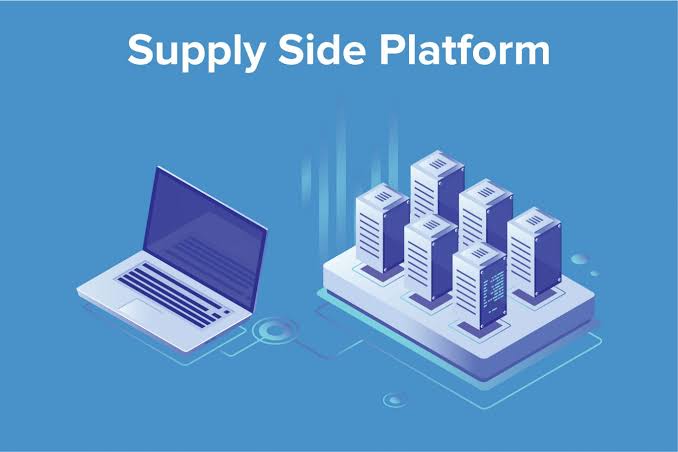
A supply-side platform (SSP) is the backbone that enables publishers—website owners, app developers, digital media companies—to programmatically sell their ad inventory.
The SSP connects a publisher’s ad slots (inventory) to multiple demand-side platforms (DSPs), ad exchanges, and other buyers simultaneously, thereby maximizing competition for each impression.
When a user visits a page or app, the SSP generates a bid request that contains contextual data about the page, user signals (device type, locale, cookie or ID data, etc.), viewability parameters, ad slot format, and sometimes floor price or minimum acceptable CPM—all within milliseconds.
DSPs receiving that bid request evaluate whether the impression fits their campaign targeting and budget constraints.
If yes, they submit a bid. The SSP then runs an auction (often real-time bidding, or RTB), takes into account all bids that meet eligibility (including floor price, ad quality, brand-safety filters), and selects the highest qualifying bid.
The winning ad creative is then served—all in under a blink.
This architecture—SSP on the supply side, DSP on the demand side—enables scale, automation, and speed: publishers and advertisers get efficient monetization and access to massive, diverse audiences.
Because SSPs act as a bridge between supply and demand, the quality of that bridge—how well inventory is packaged, how many demand sources respond, how quickly, how floor prices are set, how inventory is filtered or prioritized—all influence whether an ad bidder wins or loses.
In other words: win rate depends on much more than just the nominal bid price. That’s why improving SSP win rate in 2025 requires a holistic, strategic approach.
What Drives SSP Win Rate Beyond Just “Bid More”
Auction Mechanics, Floor Price, and Inventory Quality
The simplest factor appears obvious: the higher you bid, the more likely you’ll win. But in reality, the mechanics of an SSP auction create several variables between bid price and win outcome.
Many SSPs allow publishers to set a “floor price”. That is, a minimum acceptable bid for a given impression or inventory segment.
If your bid doesn’t meet that floor, the auction won’t even consider you, no matter what.
Similarly, the SSP may implement yield- and quality-management heuristics: they might filter out bids based on ad format compatibility, viewability, creative requirements, or brand-safety rules.
If you ignore floor price or try to win impressions that regularly clear at high floors without adapting your bid accordingly, your win rate will stay low regardless of how aggressive you are in other placements.
Also, impressions from low-quality or non-viewable inventory often get filtered, even if your bid is competitive.
Additionally, quality of inventory—device type, geolocation, user context, page content—influences demand.
Premium inventory (e.g. high-viewability, brand-safe, desirable geographies) tends to attract more bidders, which raises the clearing price and increases competition.
On the flip side, lower-quality inventory may attract fewer bidders but also might be ignored by larger DSPs, making it harder to win at scale.
Therefore, a deeper understanding of how floor prices and inventory segmentation work goes a long way toward improving SSP win rate.
Header Bidding, Supply Path Optimization, and Demand Density
Modern programmatic setups often use header bidding or similar multi-source demand architectures rather than older waterfall-based methods.
In header bidding, multiple SSPs (or demand sources) are offered the same impression simultaneously.
This increases competition, tends to raise clearing prices, and also introduces new complexity for both publishers and buyers.
For a bidder, having multiple SSPs competing for the same impression means more bid requests—but also the risk of bid duplication or attenuation.
Some DSPs will receive duplicate bid requests for the same impression through different SSPs or paths, which complicates win-rate calculations and makes real demand harder to assess.
This is where supply path optimization (SPO) becomes critical. DSPs (or buyers) that analyze which SSPs consistently deliver impressions (and wins) for given inventory can prioritize those supply paths.
This reduces wasted bids, increases win probability on high-performing inventory, and optimizes cost efficiency.
If your buying setup disregards supply path, duplicates bids, or indiscriminately chases volume across many SSPs without tracking win history or win-rate per SSP, your overall SSP win rate will be diluted.
On the other hand, a surgical, data-driven SPO approach can improve win rate significantly—often more so than simply raising bids.
Latency, Bid-Shading, and Auction Type Changes
The speed of response matters. With real-time bidding, auctions happen in milliseconds.
If your DSP (or ad server) is slow to respond, fails to respond within SSP-defined timeouts, or suffers from latency due to geographic distance or poor infrastructure, you may get dropped—again, regardless of bid price.
Some demand-side buyers or SSPs that rely on slower partners or servers will see their win rates suffer accordingly.
Furthermore, auction type matters. Historically, many SSPs used second-price auctions, where the highest bidder wins but pays a price equal to the second-highest bid (plus a small increment).
But with header bidding and shifting industry norms, first-price auctions (or hybrid models) are increasingly common—meaning the winning bidder pays their full bid.

First-price auctions penalize naive bidding strategies more.
Bidding aggressively without a clear understanding of clearing prices or without bid shading (adjusting bids intelligently based on probability of win and value) can lead to overpaying, or result in losing when your bid is too conservative.
Some advanced DSPs use bid shading—algorithms that estimate optimal bid price to maximize probability of win while controlling cost—which tends to improve effective win rate and cost-efficiency.
In a 2025 landscape where auction types, demand density, and latency vary widely across SSPs, ignoring latency, shading, or auction type is a good way to sabotage your own SSP win rate.
Demand-Side Platform Quality, Bid Frequency & Targeting Filters
Not all DSPs are equal. Some have better infrastructure, faster servers, better identity resolution, better targeting algorithms, or stronger relationships with SSPs.
As a result, the quality of the DSP (or DSP seat) you use influences win rate significantly.
If your DSP is poorly optimized, or if you apply overly restrictive targeting (geos, device types, audiences, brand safety, supply-path blacklists), many bid requests will be dropped—meaning you never get to the auction.
Over-filtering on the DSP side reduces the number of eligible bids, which in turn reduces your chance of winning.
Similarly, bid frequency and pacing matter.
Bombarding every single impression with a bid might sound like a path to volume wins—but it often leads to poor win rate (many bids lost, many impressions skipped) plus wasted resources.
More selective bidding—only on inventory that matches your target criteria and historical win-performance—tends to yield higher win rate, more efficient spend, and better ROI.
Proven Tactics to Improve SSP Win Rate in 2025
Audit and Optimize Floor Price Sensitivity
Start by analyzing cleared price floors for the inventory you target. Look at historical data: what CPMs actually clear on that inventory with other buyers? Adjust your bid strategy accordingly.
If you consistently bid below floor, you’ll never win. If you constantly overbid, you’ll overpay.
A better approach is to dynamically adjust bids relative to floor—perhaps bidding just above the median clearing price rather than maximum.
Combine this with selective bidding on inventory segments known to convert or add value (geos, devices, placements). The result: higher effective win rate without inflating cost-per-impression.
Prioritize High-Quality Supply Paths, Reduce Overbidding on Low-Value Inventory
Use supply-path optimization. Track which SSPs and exchanges consistently deliver impressions at reasonable clearing CPMs with acceptable quality (viewability, geo, device, view-through metrics).
Favor those supply paths; drop or blacklist poorly performing ones.
Avoid the temptation to chase volume by bidding across many SSPs indiscriminately. Sometimes fewer but better-targeted SSPs yield higher win rate with better ROI.
Also, consider blending private deals (PMPs) or direct deals for higher-value inventory, rather than relying purely on open exchange—if your budget and targeting justify it.
These can give better win probability due to lower competition and more control.
Optimize for Latency and Infrastructure Performance
Make sure your DSP stack (or SSP integration) is optimized for low latency: geographically distributed servers, fast identity resolution, streamlined demand pipelines, real-time connection to major SSPs, minimal bid-processing overhead.
Consider bid-shading strategies if auction type is first-price—this helps balance winning vs cost.
Intelligent shading can raise the probability of winning without overbidding, which improves effective SSP win rate and cost efficiency.
Also, avoid aggressive over-filtering on creative formats, viewability thresholds or device filters unless strictly necessary; sometimes relaxing them slightly improves bid eligibility significantly—thereby increasing odds of winning.
Use Data-Driven Targeting and Campaign Pacing, Not Spray & Pray
Rather than bidding on every possible impression, define clear campaign target criteria (geo, user segments, devices, interest signals, content categories) based on past performance or predictive modeling.
Focus budget on inventory with a history of yields.
Limit bidding to times, placements, or inventory types that consistently perform; avoid overextending to low-value, low-quality impressions that drag down win rate and waste spend.
Track performance per SSP, per supply path, per inventory type; feed that back into your DSP targeting/pacing logic.
Over time, this selective—but optimized—bidding approach tends to improve SSP win rate and overall campaign ROI.
Why SSP Win Rate Matters For Buyers and Publishers Alike
A high SSP win rate signals a few things: you’re bidding intelligently (not just aggressively), targeting inventory that aligns with demand, choosing supply paths wisely, and submitting bids that meet floor & quality thresholds.
For advertisers using DSPs, that means more of your budget actually converts into served impressions.
For publishers using SSPs, it means higher fill-rates and better yield per impression.
Win rate also becomes a feedback metric: by tracking win rate across SSPs, geos, inventories, devices, times of day, you begin to see patterns, strengths and weaknesses.
That data helps refine bid strategies, pacing, supply-path choices, and creative targeting.
Over time, you avoid wasted bids, reduce wasted spend, and improve return on investment.
Moreover, as first-price and header-bidding models dominate, naive bidding strategies (bid high, hope to win) are cost-inefficient and often ineffective.
A disciplined, data-driven approach to SSP optimization becomes less of a “nice to have” and more of a competitive necessity.
Common Pitfalls And How to Avoid Them
Even experienced buyers/publishers often fall into a few recurring traps. Recognizing and avoiding them sharply improves chances of success.
#1. Ignoring floor price or overbidding blindly: Leads to paying too much or losing auctions consistently. Instead, calibrate bids to floor and historical clearing prices.
#2. Overloading on supply paths / SSPs without tracking performance: More SSPs doesn’t always equal better results. Keep only SSPs that deliver good win rate and yield.
#3. Latency / technical infrastructure problems: Slow bid response, poor server location, inefficient DSP/SSP connections kill win rate even with high bids.
#4. Over-filtering creative, viewability, targeting on DSP side: Too strict filters drop many bid requests, shrinking the pool of potential wins.
#5. Spray-and-pray bidding: Bidding everywhere indiscriminately often yields low win rate, wasted spend, poor ROI. Better to be selective and strategic.
#6. No feedback loop or data-driven optimization: Without tracking performance per inventory type, SSP, geo, you end up repeating suboptimal bidding — never improving.
How 2025 Trends Change the Game
As of 2025, programmatic advertising continues to evolve. More SSPs are consolidating or merging with ad exchanges, making supply paths more complex.
First-price auctions and header bidding have become more dominant than older waterfall or second-price auction models.

At the same time, demand-side technology continues to advance—with faster servers, smarter bid-shading algorithms, and better data-driven targeting.
Given this landscape, the value in optimizing SSP win rate lies not only in winning more impressions, but in winning the right impressions, efficiently, at scale, and cost-effectively.
In other words: as the programmatic ecosystem becomes more competitive and more automated, strategic optimization becomes the differentiator—not raw bidding volume.
Conclusion
If there’s one lasting takeaway for 2025, it’s that improving SSP win rate demands more than placing high bids.
It’s about understanding the mechanics of modern programmatic auctions, optimizing supply paths, respecting floor prices, avoiding latency, and targeting inventory intelligently.
Treat SSP win rate not as a vanity metric, but as a signal — a compass guiding where your spend actually converts.
Use it to refine your bidding strategy, prune inefficient supply paths, and sharpen targeting.
With a deliberate, data-driven approach, you can dramatically improve SSP win rate, deliver better yields, and get more value from every impression bid.